


Emergency Flood Cleanup Bergen County Property Owners Need

A flooded basement in Bergen County can go from a wet floor to a major property loss in a matter of hours. Emergency flood cleanup Bergen County property owners need is not simply about removing visible water. It is about stopping further damage, protecting occupants, documenting conditions, and drying the structure correctly before moisture creates a second problem.
Whether the water came from a burst pipe, heavy rain, a failed appliance, sump pump overflow, or a sewer backup, the first response shapes the outcome. Fast, organized mitigation can limit damage to flooring, drywall, insulation, furniture, inventory, and building systems. Delays often allow water to travel behind walls, beneath finished floors, and into areas that are harder and more expensive to restore.
What to Do When Flooding Starts
Start with safety. If water is near outlets, electrical panels, appliances, or wiring, stay out of the affected area until it is safe to enter. If there is an active leak that can be isolated safely, shut off the water source. When the source is unknown, the water is contaminated, or the area is unsafe, do not attempt to investigate it yourself.
Call for professional emergency service as soon as possible. A qualified restoration team can assess the source, identify affected materials, begin extraction, and establish a drying plan. Emergency Relief Restoration LLC operates 24/7 and is prepared to mobilize quickly, with a stated 27-minute response time for urgent property damage situations.
If it is safe to do so, keep people and pets away from the water. This is especially critical after a sewage backup, outdoor floodwater intrusion, or water of unknown origin. These conditions may carry bacteria, chemicals, or other contaminants that require controlled cleanup and protective procedures.
Why Fast Flood Cleanup Matters
Standing water is only part of the emergency. Moisture continues moving through porous materials after the surface appears dry. Carpeting and padding can hold water below the visible layer. Drywall may wick moisture upward. Wood flooring can swell or cup, and moisture can settle inside wall cavities, under cabinets, and within insulation.
The longer those materials remain wet, the more difficult restoration becomes. Some materials can be dried and saved when addressed promptly. Others may need removal because they have deteriorated, absorbed contamination, or cannot be dried to an acceptable standard. The right decision depends on the water source, how long the materials were wet, their construction, and moisture readings taken during the assessment.
There is also a health consideration. Clean water from a supply line may begin as a lower-risk event, but conditions can change when it moves through a building or sits for an extended period. Sewer water and many forms of stormwater require a different containment and sanitation approach from the start. A professional team distinguishes between these situations instead of applying one cleanup method to every flood.
The Emergency Flood Cleanup Bergen County Process
Professional flood restoration begins with stabilization, not guesswork. The objective is to stop the loss from spreading and create a clear record of what occurred. Certified technicians inspect the affected areas, identify visible and hidden moisture, and determine which materials can reasonably be restored.
1. On-site assessment and documentation
Technicians document the source of loss, affected rooms, damaged contents, and the condition of building materials. Photographs, moisture readings, and a detailed scope help establish the work required. This documentation is also valuable when communicating with an insurance carrier or adjuster.
For commercial properties and multi-unit buildings, the assessment may include common areas, neighboring suites, mechanical rooms, storage areas, and lower-level spaces. Water does not respect lease lines or unit boundaries. A complete inspection helps prevent an overlooked area from becoming a later disruption.
2. Water extraction and controlled removal
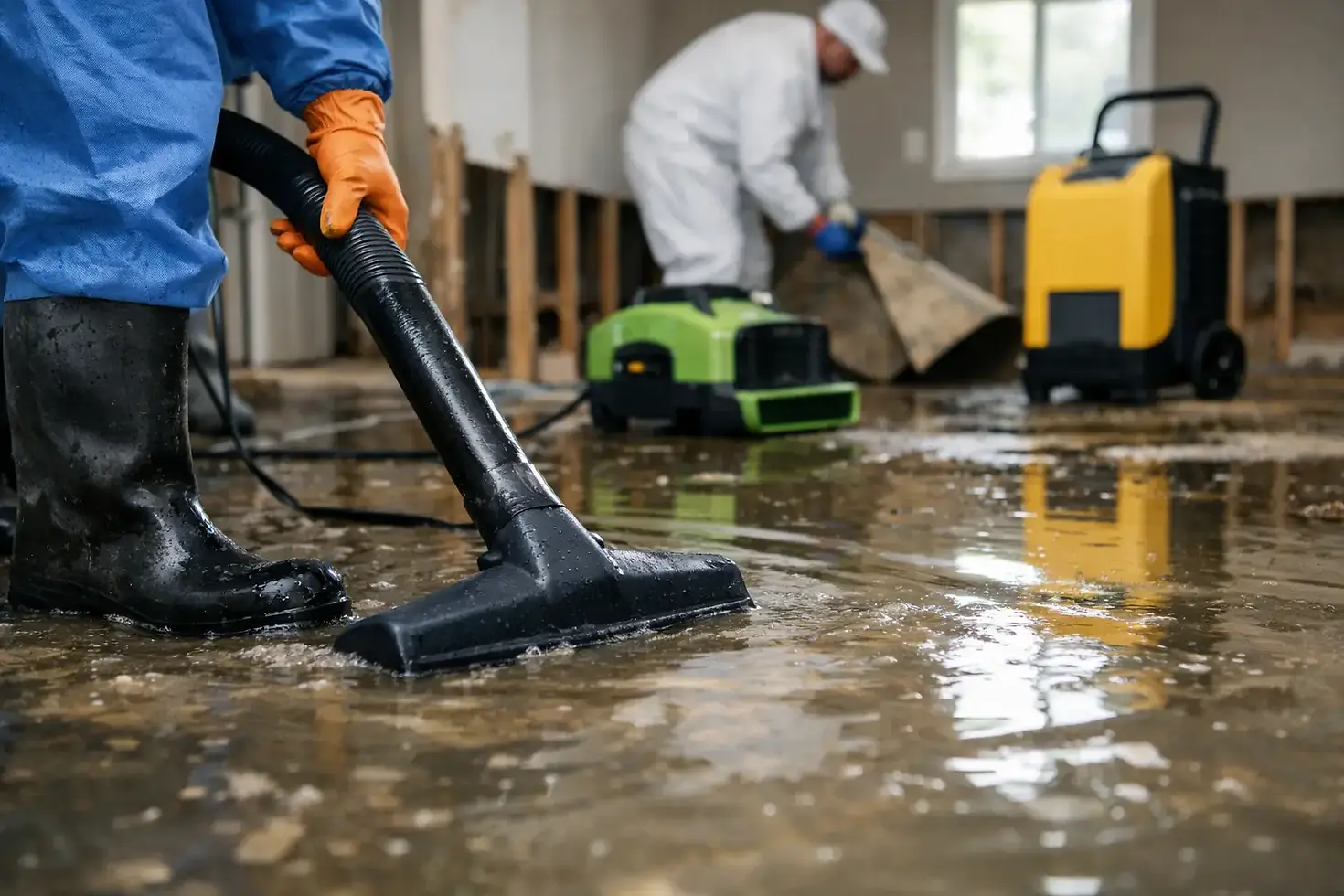
Industrial extraction equipment removes standing water from floors, carpeting, and other affected surfaces. In many cases, rapid extraction is the most effective way to reduce damage before drying equipment is installed.
When materials are contaminated or cannot be effectively dried, technicians may remove them in a controlled manner. This is not unnecessary demolition. It is a targeted step used to eliminate damaged materials, access trapped moisture, and prepare the space for safe restoration.
3. Structural drying and moisture monitoring
Drying is more than placing fans in a room. Professional equipment is selected and positioned based on the materials involved, the size of the affected area, humidity levels, and the movement of moisture through the structure. Air movers, dehumidifiers, and specialty drying equipment work together to create the right drying conditions.
Technicians return to monitor progress, record moisture levels, and adjust the drying setup when needed. The goal is to bring materials back to an appropriate dry standard, not merely make the room feel dry. This step is where technical experience matters most, particularly in finished basements, hardwood flooring, wall assemblies, and commercial spaces with extensive contents.
4. Cleaning, sanitation, and odor control
After extraction and drying begin, affected surfaces and contents may require cleaning, sanitation, or odor treatment. The method depends on the type of water involved and the materials affected. Sewage backups and contaminated floodwater require stricter containment and cleanup procedures than a clean-water overflow.
Odors should be addressed at their source. Covering a musty or sewage-related odor with fragrance does not resolve the underlying condition. Proper cleaning, removal of unsalvageable materials, and confirmed drying are the foundation of effective odor control.
5. Insurance coordination and restoration planning
Flood damage creates paperwork at the same time property owners are trying to protect their home or business. Thorough documentation can support the claims process by showing the cause, extent, and mitigation work performed. Restoration professionals can communicate directly with insurance representatives and provide records needed for review. Coverage and claim decisions remain with the insurer, but organized information can reduce confusion and avoid unnecessary delays.
Once mitigation is complete, the property may need repairs such as drywall replacement, flooring work, painting, trim installation, or reconstruction. Coordinating mitigation and rebuild through one accountable restoration team helps reduce handoffs and keeps the project moving from emergency response toward a usable space.
Different Flood Sources Require Different Responses
A pipe break in a finished basement is not handled the same way as rainwater entering through a foundation wall. A dishwasher overflow affecting a kitchen may be contained quickly, while a sewer backup can require extensive containment, removal, and sanitation. The source determines the safety protocol, the materials that can be salvaged, and the scope of cleanup.
Storm-related water damage can be particularly complex in Bergen County. Heavy rainfall may affect basements, garages, ground-floor commercial spaces, and properties with drainage or sump pump failures. Water can enter through more than one pathway, and the visible entry point is not always the full story. A careful inspection helps identify whether water has migrated into adjacent rooms, wall cavities, or stored contents.
For property managers, speed also protects tenants and operations. A fast response can help reduce unit downtime, preserve common areas, and create a documented record for owners, residents, and carriers. For business owners, the priority may include protecting inventory, equipment, files, and the ability to reopen safely. The mitigation plan should reflect those operational realities.
When the Water Is Gone but the Risk Is Not
A common mistake is assuming the emergency has passed once standing water has been removed. Hidden moisture is often the reason a small flood becomes a larger repair weeks later. Signs can include persistent odors, floor movement, staining, peeling paint, swollen baseboards, or elevated moisture readings behind finished surfaces.
Professional monitoring helps prevent premature equipment removal. Drying should be verified, not assumed. This matters in older homes, finished basements, multi-level buildings, and commercial properties where water may have traveled farther than expected.
Flooding is disruptive, but a calm, immediate response can protect far more of the property than most owners realize. When every minute matters, the right restoration team brings order to the first hours, documents the damage, and gives the property a clear path back to normal use.


Comments