


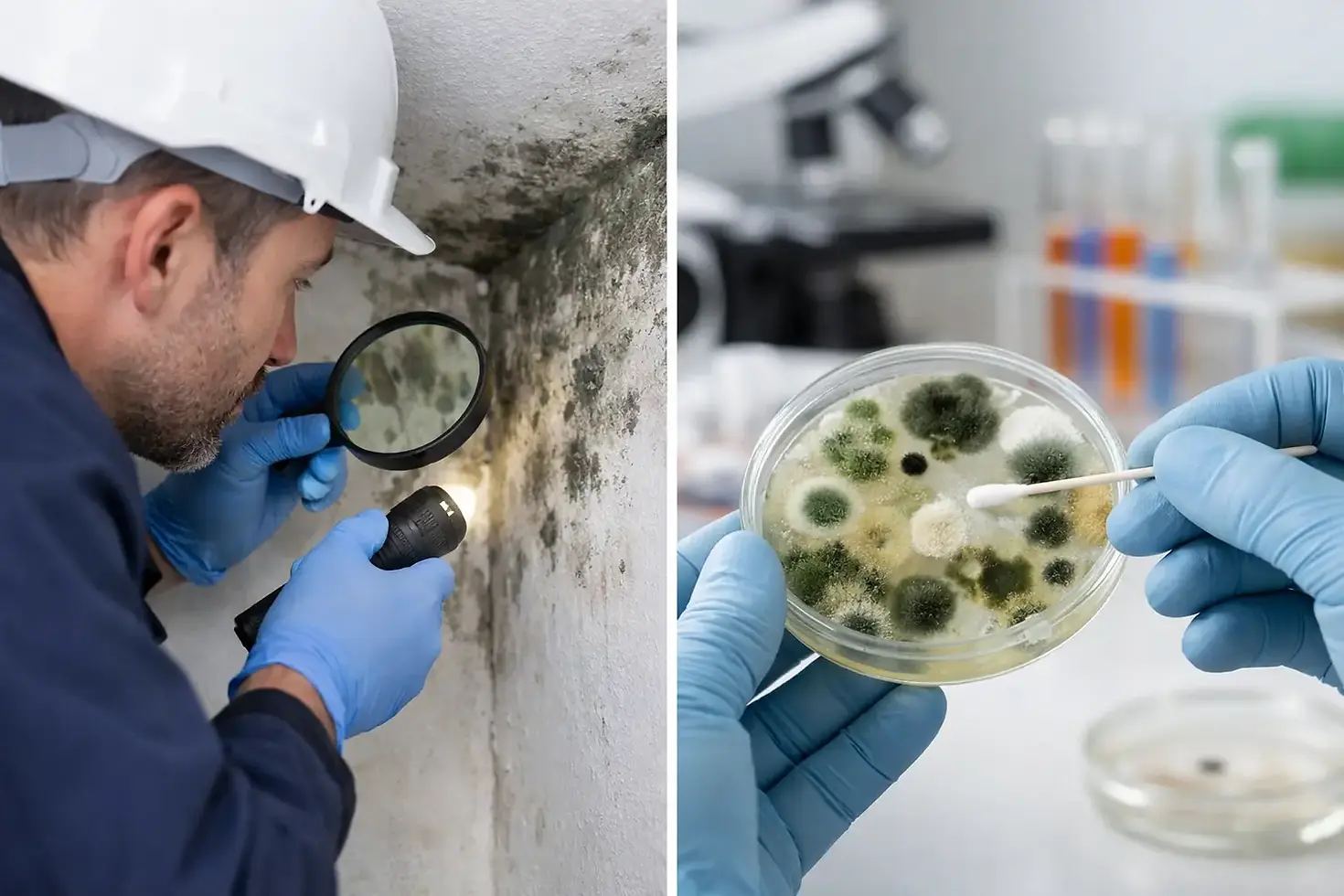
Mold Inspection Versus Mold Testing Explained

A musty odor after a basement flood, a dark stain beneath a window, or recurring moisture around a commercial ceiling tile calls for fast answers. Mold inspection versus mold testing is not an either-or decision in every case. An inspection identifies the moisture source, affected materials, and likely extent of growth. Testing can provide additional data when the findings, documentation needs, or remediation plan require it.
The priority is not to wait for a lab result while moisture continues to spread. In a water-damage situation, stopping the source, protecting unaffected areas, and beginning proper drying are often the first steps toward limiting mold growth and property loss.
Mold Inspection Versus Mold Testing: The Core Difference
A professional mold inspection is a condition assessment. The inspector looks for evidence of moisture intrusion and microbial growth, determines where water traveled, and evaluates which building materials may be affected. This process can include a visual review, moisture readings, thermal imaging, humidity checks, and inspection of concealed areas when conditions warrant it.
The practical question an inspection answers is: What happened, where is the moisture, and what must be addressed to return the property to a dry, stable condition?
Mold testing is the collection and laboratory analysis of samples. Depending on the situation, samples may come from air, surfaces, dust, or building materials. The lab report can identify or categorize spores or organisms found in the sample and compare indoor results with an outdoor reference sample when air testing is appropriate.
Testing answers a narrower question: What was present in this specific sample at this specific time? It does not, by itself, show the full extent of contamination, identify every hidden source, or replace a moisture investigation.
Why a Thorough Inspection Usually Comes First
Visible growth and active moisture are already meaningful findings. If a pipe leaked behind a wall, roof water entered an attic, or floodwater saturated flooring, the property needs a clear plan for containment, removal of affected materials where necessary, drying, and documentation. Waiting to test before addressing an obvious water problem can allow conditions to worsen.
An inspection also gives testing context. Air samples can fluctuate based on weather, open windows, HVAC operation, occupancy, cleaning activity, and how recently the area was disturbed. A result without a careful visual and moisture assessment may be difficult to interpret correctly.
For property owners, the most valuable inspection outcome is an actionable scope of work. It should identify the source of moisture, affected rooms and materials, containment needs, drying requirements, and the documentation needed for the restoration process. That operational clarity is especially important after a burst pipe, sewage backup, storm intrusion, or long-term leak.
What Inspectors Look For Beyond Visible Stains
Mold does not always appear as a dramatic patch on drywall. A qualified assessment considers conditions that support growth: elevated moisture in framing, warped trim, soft drywall, damp insulation, peeling paint, condensation patterns, and odors that intensify when HVAC systems run or doors remain closed.
In commercial properties, the inspection may expand to tenant spaces, corridors, utility rooms, ceiling plenums, and areas affected by a common plumbing or roof event. In multifamily buildings, identifying whether moisture traveled between units can help property managers make decisions quickly and reduce disruption.
When Mold Testing Can Be Worthwhile
Testing has a role, but it should be ordered for a reason rather than as a default response to every stain or odor. It may be useful when there is a persistent musty smell but no visible growth, when occupants report concerns and the source is unclear, or when an owner needs more detailed environmental information for a specific situation.
Testing may also support decision-making when a building has a history of repeated moisture events, when contamination may be concealed in difficult-to-access areas, or when a post-remediation verification plan calls for independent sampling. In a commercial setting, documentation requirements from a lease, risk manager, consultant, or project stakeholder may make testing appropriate.
The trade-off is that samples provide a snapshot, not a complete diagnosis. A normal-looking air sample does not prove that every wall cavity or material is free of mold. Conversely, a result showing spores does not automatically establish a dangerous condition or identify the source. Mold spores are naturally present in outdoor air and can enter buildings through normal activity.
That is why sample results should be interpreted with the building history, inspection findings, moisture conditions, and remediation records. Numbers without context can create confusion and delay the work that actually protects the property.
Situations Where Testing May Not Change the Next Step
If a qualified inspection finds visible mold growth alongside an active or recent moisture source, testing often does not change the immediate response. The source still needs to be corrected, affected materials still need to be evaluated, and moisture still needs to be removed through proper mitigation and drying.
For example, water that has wicked into drywall after a hidden supply-line leak can create conditions for growth behind the wall even when the surface stain is small. The decision to open and assess that area is typically based on the water history, moisture readings, material condition, and visible evidence - not solely on an air sample.
The same applies after significant flooding or sewage contamination. The first concern is safe stabilization, contamination control, removal of unsalvageable materials where needed, and documented drying. Testing may be considered later as part of a defined verification process, but it should not hold up urgent mitigation.
What a Professional Mold Assessment Should Produce
A useful assessment does more than say mold may be present. It should help the owner, manager, insurer, and restoration team understand the next decisions. Depending on the property and event, that may include photographs, moisture documentation, affected-area boundaries, observations about likely water migration, and a recommended path for containment and remediation.
For insurance-related losses, documentation matters from the beginning. Photos, readings, equipment records, and a clear record of affected materials can support communication with the carrier. Coverage decisions remain with the insurer and policy terms, but organized records help establish what occurred and what work was necessary to stabilize the loss.
At Emergency Relief Restoration LLC, IICRC-certified technicians approach suspected mold with the same urgency used for water and flood damage: identify the cause, prevent further spread, document conditions, and create a controlled restoration plan. For Bergen County and surrounding New Jersey properties, fast action can be the difference between a contained repair and a wider reconstruction project.
How to Decide What Your Property Needs
Start with the event, not the sample. If there has been a recent leak, flooding, roof intrusion, appliance overflow, or unexplained moisture, arrange a professional inspection as soon as possible. The inspection establishes whether drying, containment, material removal, or further investigation is needed.
Consider testing when the inspection cannot explain an odor or concern, when visible conditions are absent but moisture history suggests a hidden issue, or when independent verification is specifically required. If testing is performed, make sure the sampling plan addresses a real question and that the results will be reviewed alongside field findings.
For occupied homes and businesses, do not overlook timing. Mold conditions can expand while a property is waiting for decisions, especially in warm, humid spaces or behind wet building materials. Quick, controlled response protects the building, limits interruption, and gives everyone involved clearer documentation.
If you see signs of moisture or suspect mold after a water event, the most useful next move is a prompt professional assessment. Get the source under control, document what is affected, and let the inspection determine whether testing will add meaningful value to the restoration plan.


Comments