


When to Replace Wet Drywall After Water Damage
- Vincent Turelli
- Aug 2
- 5 min read

A water stain on drywall can look minor while moisture is spreading behind the wall, into insulation, and along framing. Knowing when to replace wet drywall is not simply a matter of waiting for the surface to feel dry. The source of the water, how long materials stayed wet, and whether the water was contaminated all determine whether drying can save the wall or removal is the safer decision.
For a homeowner, property manager, or business owner, the priority is to stop the water source and begin professional mitigation quickly. Every hour of delay can increase material damage, create conditions for mold growth, and make reconstruction more extensive.
When Does Wet Drywall Need to Be Replaced?
Drywall is made with a gypsum core faced with paper. It is an absorbent building material, which means water can wick upward and outward beyond the visible water line. Once the core softens or the paper facing is compromised, drying alone may not restore its strength or cleanliness.
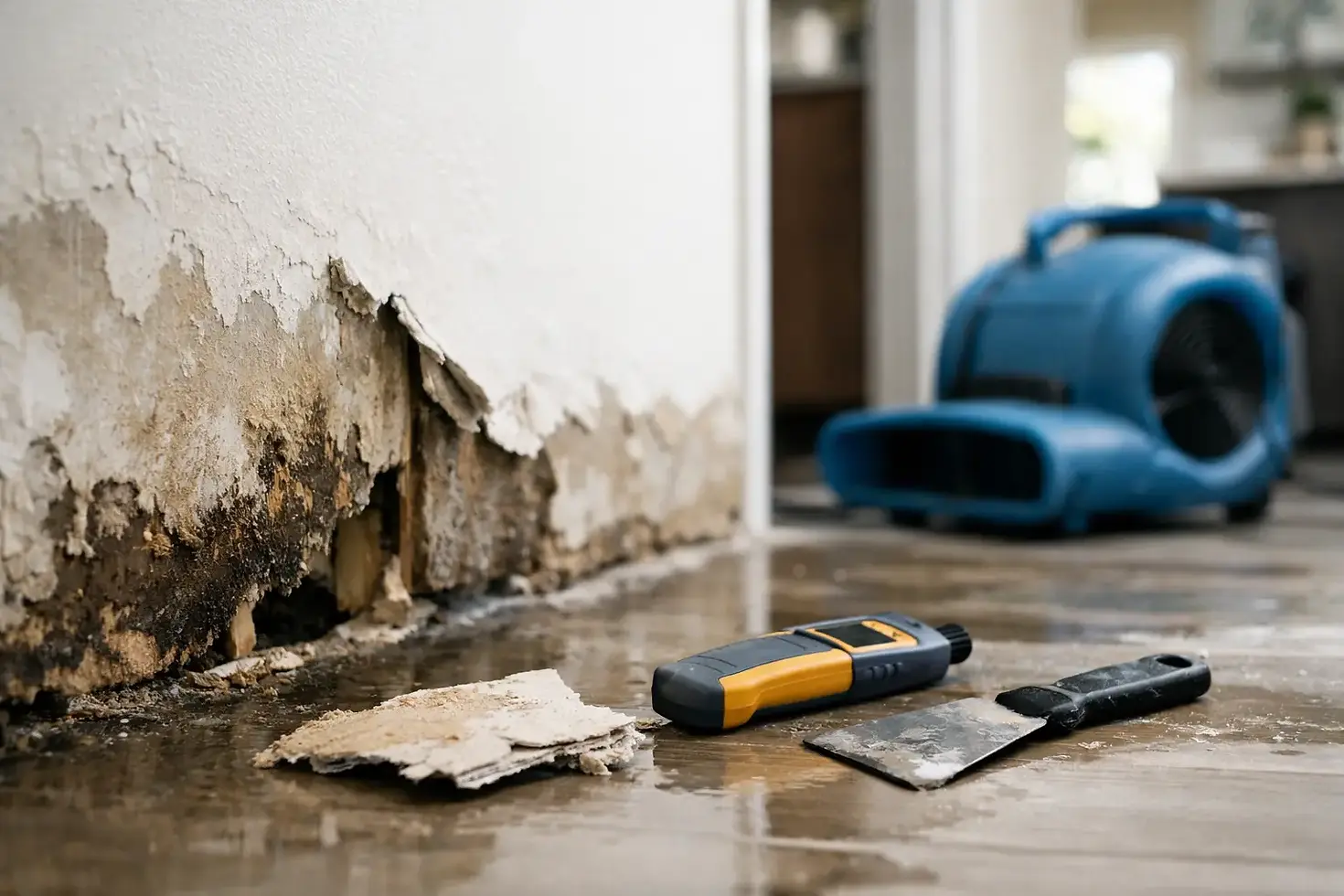
Replacement is usually necessary when drywall has lost structural integrity. Warning signs include sagging ceilings, bulging wall sections, soft or crumbly gypsum, separated seams, peeling paper, or fasteners that are pulling through the board. A wall may also need removal if moisture testing shows water remains trapped in the cavity after drying equipment has been running.
Contamination changes the decision immediately. Drywall affected by a sewage backup, toilet overflow involving waste, outdoor floodwater, or other unsanitary water generally cannot be safely restored. The porous paper and gypsum can retain contaminants, so affected materials are removed under controlled conditions and the structure is cleaned and dried before rebuilding.
The Water Source Matters as Much as the Damage
Not all water losses are the same. Restoration professionals classify water based on its source and potential contamination. This classification helps determine whether wet drywall may be dried in place or should be removed.
Clean Water Can Sometimes Be Dried
Water from a supply-line break, an overflowing sink with clean water, or a rain intrusion may begin as clean water. If the issue is discovered quickly, the drywall is still firm, and moisture has not migrated far into insulation or wall cavities, targeted structural drying may save portions of the wall.
Even then, the decision should be based on moisture readings, not appearance. A wall can look dry while the bottom plate, insulation, or backside of drywall remains wet. Professional equipment and monitoring identify where moisture has traveled and verify whether drying is progressing.
Gray Water Often Requires More Removal
Water from a washing machine discharge, dishwasher overflow, shower drain backup, or similar source may contain contaminants. If gray water has soaked drywall, particularly for an extended period, removal is often the prudent approach. The paper facing can absorb residue that is difficult to fully sanitize.
A loss that begins with relatively clean water can also become more contaminated as it passes through building materials, sits for hours, or mixes with dirt and other debris. That is why a fast assessment matters.
Sewage and Floodwater Require Controlled Removal
Sewage, toilet water containing waste, and floodwater are not ordinary drying situations. These sources can carry bacteria, viruses, chemicals, and other hazards. Wet drywall, insulation, carpet padding, and other porous materials affected by this water typically require removal and appropriate disposal.
Do not enter contaminated areas without proper protection or try to dry them with household fans. Keep people and pets away, especially from areas with visible sewage, standing water, or a strong foul odor. A trained restoration team can contain the affected area, document conditions, remove damaged materials, and perform the required cleaning and drying process.
How Long Has the Drywall Been Wet?
Time is a major factor, but there is no single hour mark that applies to every water loss. Drywall exposed to clean water for a short period may be recoverable if the response begins immediately. Drywall that has remained wet for a day or more has a higher risk of swelling, delamination, microbial growth, and moisture migration into concealed spaces.
The material’s condition is more meaningful than a calendar alone. A technician evaluates moisture content, maps the spread of water, checks baseboards and insulation, and examines whether the board is still stable. If the drywall has absorbed enough water to lose its shape or strength, replacement is usually more reliable than attempting to preserve it.
Ceilings deserve special attention. Wet ceiling drywall can become heavy and unstable without much visible warning. Sagging, cracking, dripping, or a bowed ceiling should be treated as a potential safety issue. Stay clear of the area and arrange an immediate inspection.
Signs That Drying Is No Longer Enough
Some damage is obvious, but other conditions become clear only after moisture inspection. Replacement may be recommended when there is visible mold growth, a persistent musty odor, swollen baseboards, staining that returns after drying, or deterioration around outlets, trim, and wall corners.
Insulation behind wet drywall is another deciding factor. Fiberglass insulation can hold moisture against framing and drywall, while cellulose insulation can lose its form and retain water. In many cases, carefully removing a controlled section of drywall allows the affected insulation to be removed, the framing to dry, and the wall cavity to be inspected before reconstruction.
This is not unnecessary demolition. It is a targeted step designed to prevent hidden moisture from becoming a larger mold, odor, or structural problem later. The amount removed should match documented moisture and contamination conditions, not guesswork.
What a Professional Wet Drywall Assessment Includes
A proper assessment begins with identifying and stopping the active water source. The restoration team then documents the loss, measures moisture in walls and floors, identifies affected materials, and determines the water category. This information guides a drying plan or a controlled removal plan.
When drywall can be saved, technicians use commercial air movement, dehumidification, and moisture monitoring to dry the assembly back to an appropriate standard. When it cannot be saved, they establish containment as needed, remove affected porous materials, clean exposed framing and surfaces, and continue structural drying before repairs begin.
Documentation is especially valuable for insurance claims. Photos, moisture readings, equipment records, material inventories, and daily drying notes create a clear record of the conditions and mitigation work performed. Coverage decisions remain with the insurance carrier, but detailed documentation can help support a smoother claim review.
Do Not Repaint Over Water-Damaged Drywall
Painting over a stain may improve the appearance temporarily, but it does not solve active moisture, weakened gypsum, or contamination inside the wall. The same applies to replacing a baseboard while leaving wet drywall and insulation behind it.
Before repairs begin, the area should be verified dry and clean. Rebuilding too early can trap moisture behind new materials, leading to recurring stains, odor, warped finishes, or mold concerns. A complete restoration process separates emergency mitigation from reconstruction for a reason: the structure must be stabilized before it is closed back up.
Fast Action Limits the Scope of Repairs
If you have a burst pipe, roof leak, appliance overflow, flooded basement, or sewage backup, do not wait to see whether the wall dries on its own. Move away from unsafe areas, protect occupants from contaminated water, and arrange a professional assessment as soon as possible.
Emergency Relief Restoration LLC provides 24/7 water damage response for properties across Bergen County and surrounding New Jersey communities. Certified technicians can assess wet drywall, document the damage, begin structural drying or removal, and coordinate the mitigation records needed for the next stage of recovery.
The best outcome is not always saving every sheet of drywall. It is making the right decision early enough to protect the framing, indoor environment, and long-term condition of the property.


Comments