


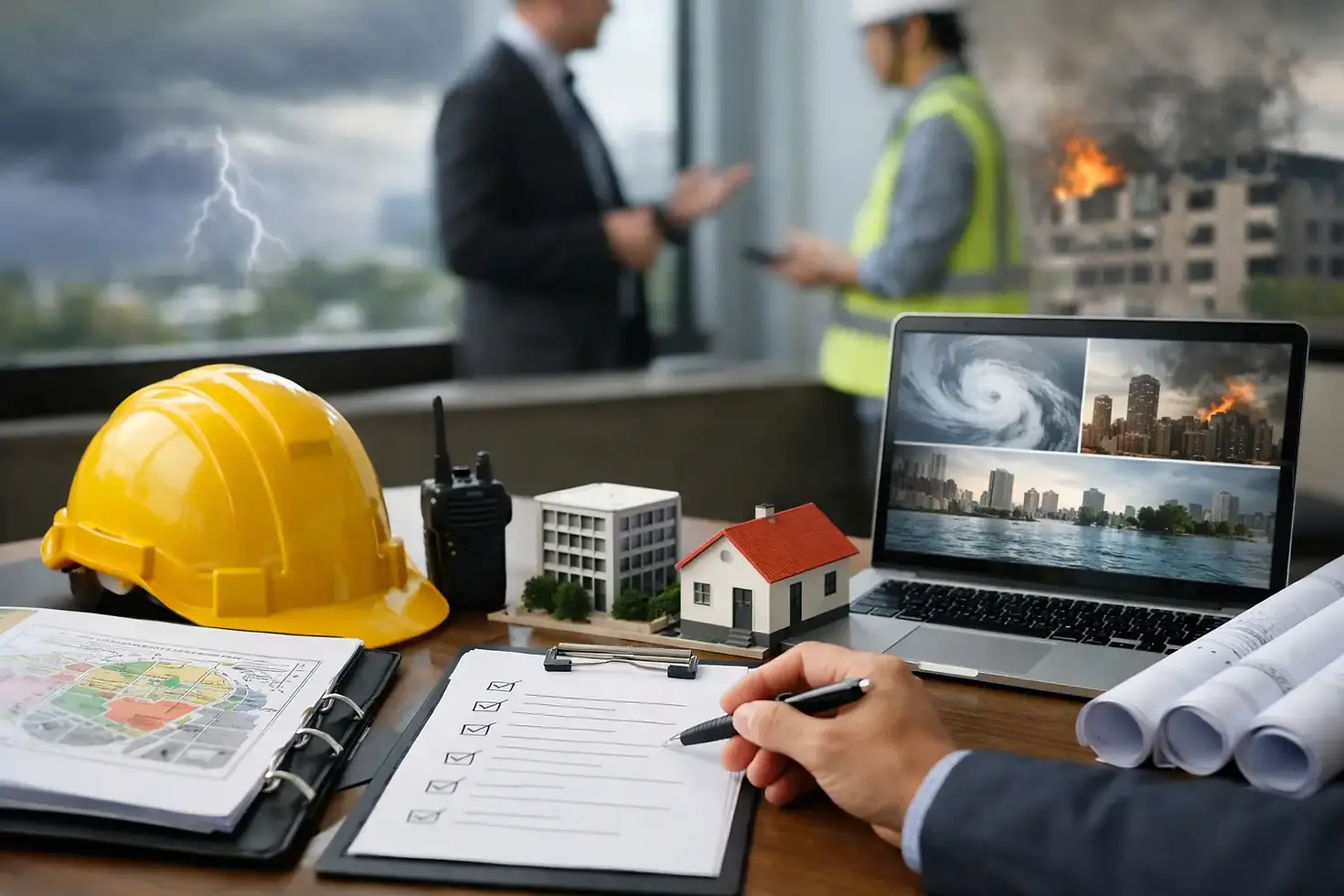
Commercial Disaster Recovery Planning That Works

A flooded office at 6:30 a.m. can cancel a full day of business before the first employee even logs in. A kitchen fire in a mixed-use building can shut down tenants, disrupt deliveries, and trigger insurance questions before the smoke clears. That is why commercial disaster recovery planning is not paperwork for a binder - it is an operating decision that protects revenue, occupancy, and business continuity.
For commercial property owners, facility managers, and business operators, the real risk is rarely just the damage itself. The bigger problem is the chain reaction that follows. Water reaches electrical systems. Smoke spreads beyond the fire room. Sewage backups create health concerns. Mold begins to grow in hidden cavities if drying is delayed. Tenants, customers, insurers, and vendors all need answers fast, and every hour without a clear response plan increases confusion and loss.
What commercial disaster recovery planning actually covers
A useful plan answers one question first: what happens in the first hour after a loss? That first hour shapes everything that follows, from safety and documentation to the scope of restoration and the length of downtime.
Commercial disaster recovery planning should cover emergency contacts, site access, shutdown procedures, internal reporting, insurer notification, damage documentation, and a clear process for bringing in certified restoration professionals. It should also account for the types of losses most likely to affect the property, whether that means sprinkler discharge in an office building, a pipe break in a retail space, storm intrusion at a warehouse, or smoke contamination in a restaurant.
The plan is not only about major catastrophes. Many of the most disruptive commercial losses begin as manageable incidents. A slow overnight leak above a server room, a clogged drain line in a medical office, or a minor electrical fire in a mechanical area can become a large operational problem when no one knows who has authority to act.
Why delays cost more than most businesses expect
In commercial settings, damage rarely stays contained. Water migrates through flooring, wall systems, insulation, elevator shafts, and adjacent suites. Smoke and soot can affect inventory, electronics, HVAC systems, and common areas well beyond the ignition source. Once a building is partially closed, the cost of interruption often starts to rival the cost of physical restoration.
That is where many plans fall short. They focus on evacuation and insurance notification but do not address stabilization. A building may be safe to enter, yet still be actively deteriorating. Wet materials continue absorbing moisture. Humidity spreads. Odors set in. Corrosion begins. If the response team is not mobilized quickly, the project becomes more complex and the reopening timeline stretches.
Fast action does not mean rushed decisions. It means having preassigned authority, accurate contact information, and a vendor response process that starts immediately. In practice, the businesses that recover faster are usually the ones that have already decided who makes the call, who documents the loss, and who coordinates restoration work.
The most important parts of a commercial disaster recovery plan
The strongest plans are practical, not theoretical. They reflect the actual building, the actual occupants, and the actual risks on site.
Risk mapping by property type
A warehouse, a medical office, a multifamily commercial complex, and a restaurant do not have the same exposure. A good plan identifies where damage is most likely to start and what operations are most vulnerable. That may include mechanical rooms, roofs, basements, kitchens, data rooms, tenant improvement areas, storage spaces, or areas with older plumbing and electrical systems.
This matters because recovery priorities change by environment. In one property, the priority may be extracting water before inventory is lost. In another, it may be isolating smoke damage so unaffected suites can stay operational. The plan should match the building, not a generic checklist.
Clear emergency roles
Someone needs authority to approve emergency mitigation after hours. Someone needs access to utility shutoffs, tenant contacts, alarm codes, and building plans. Someone needs to notify ownership, management, and insurance representatives. If those responsibilities are unclear, valuable time is lost while people try to confirm basic decisions.
In larger properties, backup contacts are just as important as primary ones. Commercial losses do not wait for normal business hours.
Documentation procedures
One of the most overlooked parts of commercial disaster recovery planning is documentation discipline. Photos, videos, moisture readings, affected area logs, equipment records, and communication notes all help create a clearer claim and restoration record. They also reduce disputes later about the extent of damage and the timeline of response.
This is one reason commercial clients often benefit from working with a restoration company that documents conditions from the start and coordinates directly with insurance carriers. Good records support faster decisions and better project control.
Continuity priorities
Some businesses need full shutdown after a loss. Others can continue operating in part of the building if affected areas are contained properly. The plan should identify what must stay online, what can be relocated, and what can be paused.
There is no single right answer here. A law office, retail store, manufacturing site, and apartment building all have different tolerance for disruption. The key is deciding those thresholds before an emergency, not during one.
Commercial disaster recovery planning and vendor selection
A recovery plan is only as useful as the response behind it. That means vendor selection should happen before damage occurs, not after midnight during a burst pipe event.
For commercial properties, restoration partners should be evaluated on emergency response capacity, technical certification, documentation standards, equipment availability, and ability to manage both mitigation and rebuild coordination. Speed matters, but speed without process creates its own problems. The right team arrives quickly, stabilizes the loss, documents what they find, and works in a way that supports both operations and the claims process.
This is especially relevant in occupied buildings, where the work may need to be phased around tenants, customers, safety requirements, and partial access restrictions. A restoration company that understands commercial conditions can help limit secondary damage while keeping communication organized.
Common planning mistakes that slow recovery
One common mistake is treating the plan as a compliance document instead of an action document. If it sits untouched until an emergency happens, names, numbers, procedures, and vendor contacts are often outdated.
Another is assuming maintenance staff can absorb every emergency function. Internal teams are essential, but many losses require immediate mitigation, specialized drying, contamination control, odor treatment, or smoke cleanup beyond routine facility operations.
A third mistake is planning only for dramatic scenarios. Major storms and fires deserve attention, but repeated commercial losses often come from more ordinary events - appliance line failures, roof leaks, sprinkler malfunctions, drain backups, and hidden moisture events. Those incidents still create major interruption when the response is delayed.
Finally, some plans ignore communication flow. Tenants, employees, ownership groups, and insurance contacts need timely updates. Without a communication structure, even a well-managed restoration job can feel disorganized to the people affected by it.
How to keep a plan usable under pressure
A good plan should be short enough to use in a real emergency and detailed enough to guide the first response. That balance matters. Overbuilt plans often fail because no one can find the needed information quickly.
The most effective approach is to maintain a core action document with current emergency contacts, building access information, utility shutoff details, escalation procedures, insurer reporting instructions, and approved restoration contacts. Supporting details can live in appendices, but the first-response section should be immediately usable.
It also helps to review the plan after any actual incident. Even a small water loss can reveal gaps in access, communication, authority, or vendor coordination. Those are useful lessons if they lead to updates before the next event.
For commercial properties in New Jersey, where storms, frozen pipe breaks, sewer issues, and building system failures can create sudden losses, practical readiness matters more than perfect formatting. Emergency Relief Restoration LLC works with property owners and managers who need immediate stabilization, professional documentation, and a clear path from mitigation through restoration. That kind of support is most effective when it is built into the plan before the emergency call is made.
When planning becomes a business advantage
Commercial disaster recovery planning is often framed as loss prevention, but it also protects business relationships. Tenants want timely communication. Customers want confidence. Ownership wants controlled downtime. Insurance representatives want clear documentation and a defined response. A property that handles an emergency in an organized way preserves more than building materials - it preserves trust.
No plan prevents every loss. Buildings age, weather changes, systems fail, and accidents happen. But a clear recovery plan changes the outcome. It shortens confusion, supports faster stabilization, and gives decision-makers a structure when the pressure is highest.
If your property plan would still leave people asking who to call, who approves work, or what happens first, that is the gap to fix now - not when water is spreading across the floor.


Comments