


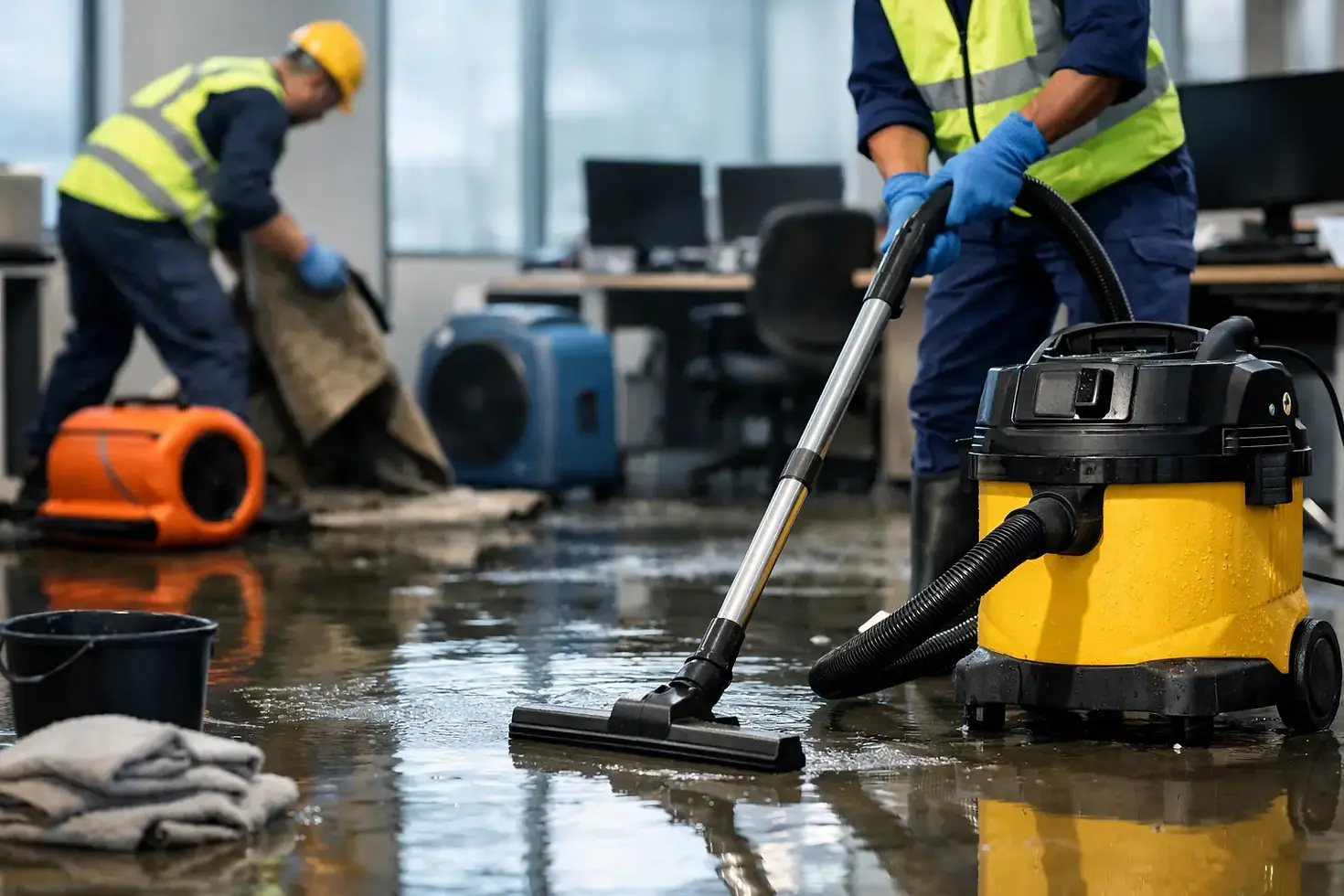
Commercial Water Damage Cleanup Steps

A soaked office floor is rarely just a floor problem. By the time water shows up in a hallway, retail space, warehouse, or medical suite, it has usually moved behind baseboards, under flooring, into wall cavities, and toward electrical systems, inventory, and equipment. That is why commercial water damage cleanup has to start fast and follow a controlled process, not a quick surface dry.
For business owners and property managers, the real risk is not only the visible damage. It is lost operating time, safety exposure, tenant disruption, and documentation gaps that make the entire event harder to manage. The right response protects the building, limits secondary damage, and keeps the path to restoration organized from the first hour.
Why commercial water damage cleanup is different
Commercial losses move differently than residential ones because the stakes are broader. A small leak in a single-family home can still be serious, but a water loss in a commercial property may affect multiple units, public access areas, shared utilities, elevators, data rooms, stock areas, and occupied workspaces all at once.
There is also more coordination involved. Property managers may need updates for ownership groups, tenants, maintenance teams, and insurance representatives. Business owners may need to make decisions around partial shutdowns, after-hours work, or relocation of staff and contents. In larger buildings, cleanup is not just about removing water. It is about managing operations while the emergency is being stabilized.
The source matters too. Clean water from a supply line break is handled differently than gray water from an appliance discharge or black water from a sewage backup. The category of water affects containment, material removal, sanitation, and occupant safety. That is one reason emergency mitigation crews do not treat every loss the same way.
What happens in the first few hours
The first phase is about control. A trained restoration team identifies the source of the intrusion, evaluates affected areas, and looks for immediate hazards such as compromised ceilings, energized equipment, slick flooring, or contaminated water. If the water source is still active, stopping that flow is the priority before drying can begin.
Next comes a detailed inspection. Technicians check both visible and hidden moisture using meters, thermal imaging, and field experience to trace where water has traveled. In commercial spaces, this often reveals more damage than expected, especially beneath vinyl flooring, inside drywall assemblies, under carpet tiles, and around shared walls.
Water extraction starts as early as possible because standing water drives further damage every minute it remains. Industrial extraction equipment removes bulk water quickly, but extraction alone is not the finish line. After surface water is removed, the structure still holds moisture. Concrete, wood, insulation, carpet pad, and wall materials can remain saturated long after the floor looks dry.
That is when structural drying begins. Air movers, dehumidifiers, and targeted drying systems are placed based on the building layout, material type, and moisture readings. In a commercial setting, placement matters. Drying equipment has to be aggressive enough to reduce damage while also accounting for occupied areas, safety controls, and access routes.
The role of containment, demolition, and sanitation
Not every commercial water loss requires demolition, but some do. If water has affected porous materials that cannot be restored safely or effectively, selective removal may be necessary to expose wet cavities and prevent further deterioration. This is especially common when water sits too long, when contamination is involved, or when hidden moisture is trapped behind finishes.
Containment becomes important when the affected space must remain partially occupied. Plastic barriers, controlled access points, and negative air strategies may be used to isolate work zones and reduce cross-contamination. In office buildings, healthcare spaces, mixed-use properties, and multifamily common areas, that control can make the difference between a manageable event and a building-wide disruption.
Sanitation is not optional when the water source is questionable. If the loss involves sewage, storm runoff, or other contaminated sources, the cleanup protocol changes immediately. Materials may need to be removed rather than dried in place, and antimicrobial treatments become part of a broader remediation plan. This is not a cosmetic step. It is part of making the environment safer for occupants and restoration crews.
Documentation matters as much as drying
A commercial loss can become more expensive when documentation is weak. Photos, moisture maps, equipment logs, demolition records, and daily updates create a clear record of what happened and what was done to mitigate the damage. That record supports communication with stakeholders and helps insurance carriers evaluate the claim based on documented conditions and actions taken.
For property managers and commercial owners, this is one of the biggest advantages of working with an emergency restoration company that handles both technical mitigation and reporting. Good documentation reduces confusion. It shows the extent of the loss, supports decisions about salvage versus replacement, and helps keep the project moving when multiple parties are involved.
It also helps with continuity. If a building engineer, owner representative, adjuster, or tenant asks what areas were affected and how drying is progressing, the answer should not be guesswork. Commercial projects need a documented chain of response from initial inspection through final moisture verification.
Common causes of commercial water losses
In New Jersey commercial properties, water damage often starts with a failed supply line, sprinkler discharge, roof leak, burst pipe, overflowing fixture, HVAC-related moisture event, storm intrusion, or sewage backup. The source affects the urgency, but not the need for immediate action.
A slow overnight leak in a second-floor office can travel into multiple tenant spaces before anyone arrives in the morning. A roof breach during heavy weather may saturate insulation, ceiling systems, and electronics long before the rain stops. A sewage backup in a restaurant, medical office, or apartment common area creates a completely different level of hazard. Each scenario needs a fast, site-specific response.
How business interruption is reduced
The goal is not only to dry the building. It is to reduce downtime where possible. That may mean phasing the work, isolating affected sections, scheduling louder demolition after hours, or prioritizing areas that are critical to continued operations. The right plan depends on the property type.
A retail store may need customer-facing areas stabilized first. An office may need server rooms or executive suites prioritized. A multifamily property may focus first on common areas and occupied units. A warehouse may need product protection and access routes preserved while structural drying continues.
This is where experience shows. Commercial water damage cleanup is not one standard script. It is a technical process shaped by occupancy, building systems, safety concerns, and how quickly the space needs to function again.
What to expect from a professional response team
A qualified emergency crew should arrive ready to assess, document, extract, and begin drying without delay. They should be able to explain what category of loss they are dealing with, what materials are affected, what immediate hazards exist, and what the next operational steps will be.
You should also expect clear communication. In a high-pressure event, vague updates make things worse. Business owners and property managers need direct information about affected areas, likely scope, drying progress, and whether reconstruction or specialty cleaning may follow. If insurance is involved, organized reporting and direct coordination can save time and reduce back-and-forth.
Emergency Relief Restoration LLC is built around that kind of response, with certified technicians, rapid mobilization, and documentation designed to support both mitigation and the claims process. For commercial clients, that combination matters because the cleanup is only one part of the larger recovery.
When speed changes the outcome
There is a narrow window where fast action can prevent a manageable water event from becoming a major restoration project. The longer water sits, the more it spreads, the more materials break down, and the more likely microbial growth, odor issues, and operational disruption become.
That does not mean every loss will look dramatic on day one. Some of the most disruptive commercial claims begin with water that appears minor at first. By the time staining, warping, odor, or occupancy complaints appear, hidden moisture has already had time to move deeper into the building assembly.
If your business, tenant space, or managed property has active water intrusion, the right next step is immediate mitigation by a team equipped to inspect thoroughly, dry structurally, document clearly, and keep the recovery organized. Fast, calm action is what protects the building and gives you the best chance to keep the disruption contained.


Comments